Category Archives: General Gubbins

Vulcan XH558

There are a few pieces of engineering creation that always bring out an emotional response. Steam Engines. The Supermarine Spitfire. Concorde. Ridiculously large bridges. The Avro Vulcan.

So imagine my surprise two weekends ago when I was quietly reading a book in my living room, when I heard a plane approach. We often get the odd aircraft go past, the kitkat air balloons, gliders from the local club and the occasional wing of attack helicopters, but this roar was bigger than anything I’d heard before. I glaced out of the window and saw a large delta wing rumble into view over the tops of the trees. There was a moment when I just could not believe my eyes, whilst the Vulcan is unique and instantly recognisable, it was just too unlikely to be flying over my house. Luckily, my camera was only in the next room so I was able to lunge for it and then outside where I held down the ‘take a photo of this’ button until it was out of sight. It was probably all over within 15 seconds.

I did a bit of reading around, because XH558 is limited to Visual Flight Rules, it’s easily low enough over the ground for the crew to tweet using a mobile phone. It turns out I was under their route from their base at RAF Brize Norton to a show at RAF Leuchars in Scotland.

The Vulcan flying past

The vulcan's rear end

The Sunday afterwards, they obligingly flew back again on their way home! Remarkably, they must have been within about 50m of their original course, which seems an unnecessarily good piece of navigating.

It’s unusual that something can shock me, I’ll take in most things my stride, but I have no shame in admitting to a few giggly aftershocks whilst it soaked in 🙂

The charitable trust that operates XH558 is always on the look out for donations, it costs on the order of £19,000 per hour to fly, so why not join the growing number of people who contribute towards this piece of our country’s heritage.

To learn a bit more about why this plane is seen by some as heroic, I can recommend reading about XM-607’s trip to the Falklands and back. Or if you fancy a laugh, there’s a Haynes Manual on the subject too

Autumn Harvest Fare

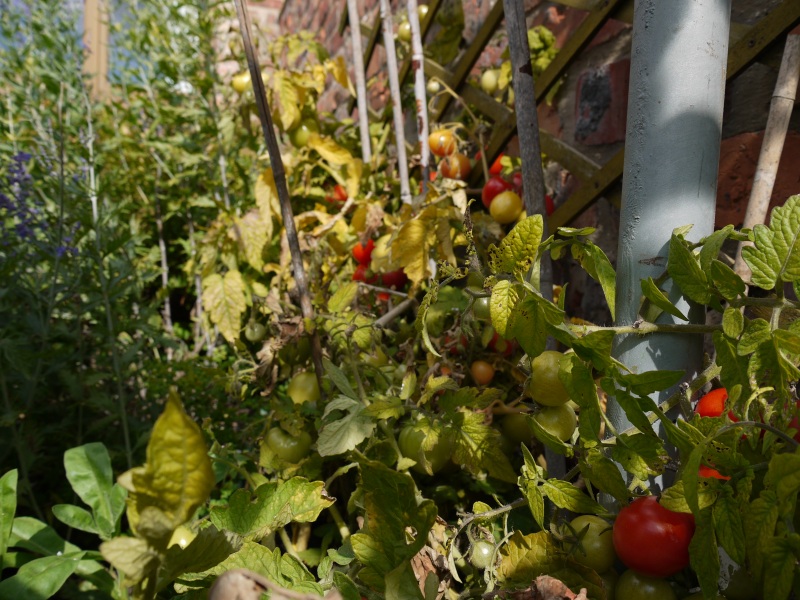
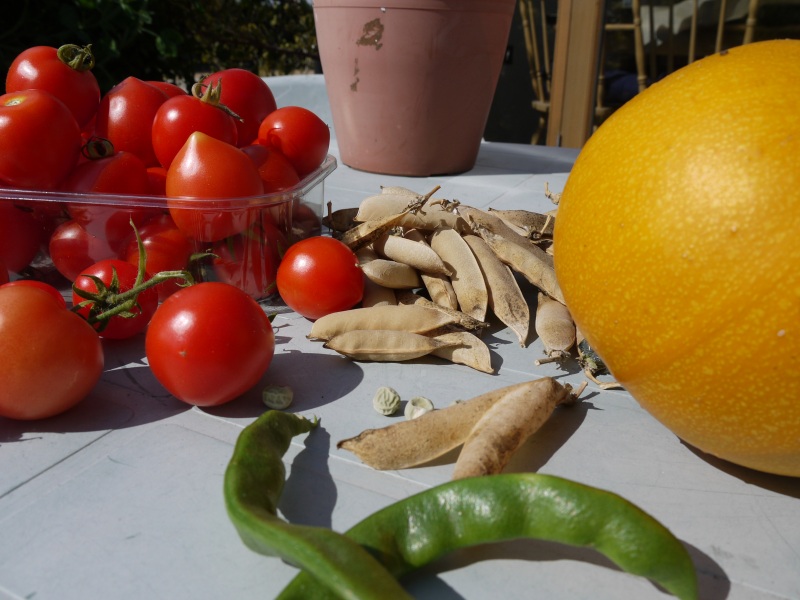
The start of Autumn heralds the long awaited arrival of the Yorkshire tomatoes. Well, they’ve been on the vines for a few weeks but only now have riped to orange and red. The three year old elephant garlic has finally died back and is ready for picking and the courgette vine had two more fruits ready for eating.

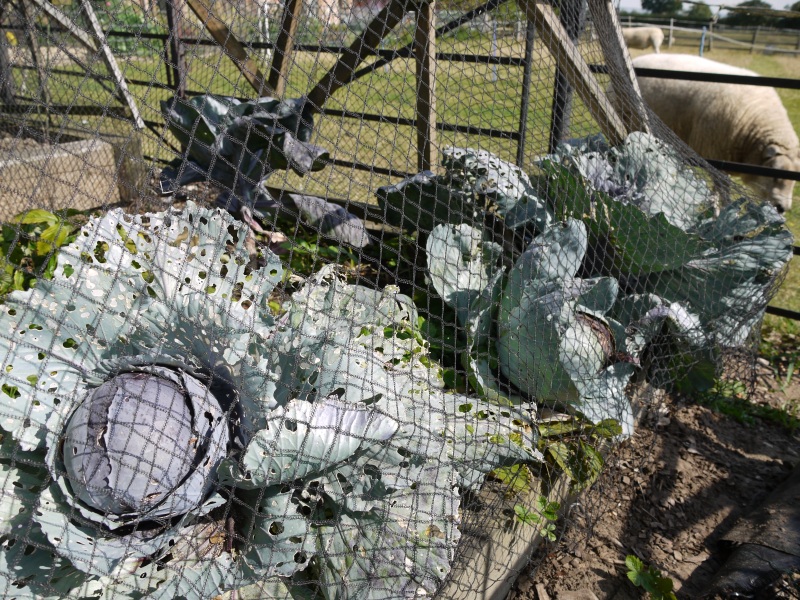
I can’t say the same for the legumes though, I blinked and missed the peas, they went from unripe to brown and dry before I really noticed and the local wasps continued their bid to win the Pest Of The Year award by getting at my ripe beans before I did, so I left them mostly to grow so I’ve got some seeds to plant for next year. I’ve still got three cabbages left, despite something having done its best to turn their leaves into lace so I’m hopeful they’ll be big enough to start picking soon. Not sure that two year vegetables are worth the effort, perhaps next year I’ll try this new Kale/Brussel Sprout hybrid that looks so fun. Sweeter than sprouts, taller than Kale and it’s a relatively quick brassica, 9-11 months.

To help celebrate things, what better than steaming bowls of home made soup accompanied with hot crusty rolls, fresh from the oven. Yum.

A week passes…

Oops, I’m sure I pressed the Publish button on this last weekend. No matter, part two fits neatly onto the end.

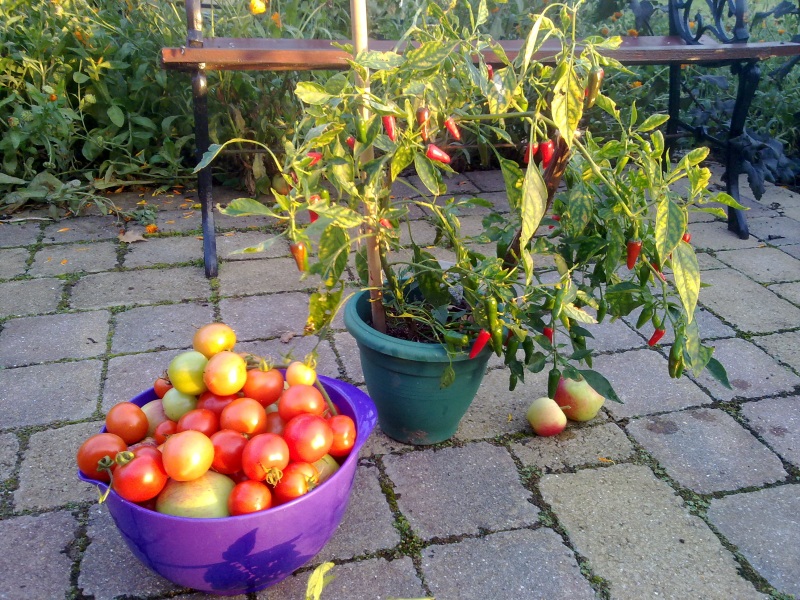
Picked another bowl load of tomatoes from the vines and noticed that the wasps had started digging their way into the rosy red patches of my apples! Gerrof! Just to be annoying, rather than all eating one apple, they had to be greedy and go for one each. Oh well, the apples can come in too then. Not a bad size and yield considering I removed most of the blooms earlier this year. Now to find a use for them that isn’t a waste. Mmm, apple and blackberry muffins.. The chilli plant is looking a bit worse for wear too, so that can be picked. The fruit might not be very big, but there’s a least a year’s supply of chilli peppers for the kitchen. They’re not thick and juicy enough to warrant turning into powder though, so it’s into the freezer for them.
Looking through my posts index for previous years, I’m about 4 weeks early with my first batch of chutney this year. Who knew we were actually ahead? My informal tomato growing trial was succesful, same batch of seeds from the same variety but grew and ripened very differently. One set was grown in a long, shallow trough with fresh expensive compost with a trellis to climb up. One set was grown in a deep trough (this container won last year) but shared with some old bulbs I couldn’t be bothered to fish out first. And a final set was grown in the open ground with lots of organic matter (yay, horse poo, woo) and bambooo canes to climb up.

The winner was the fresh compost, despite the shallow trough that needed watering every day. I suppose this just reinforces the usefulness of grow bags. The ones in the open ground had the bushiest and sturdiest growth, but didn’t match the brick wall for heat retention and speed of ripening. The deepest trough produced some pretty manky plants, so yes, hungry fruits need as much compost as you can give them, but only when coupled with shelter. Groundbreaking stuff….not.

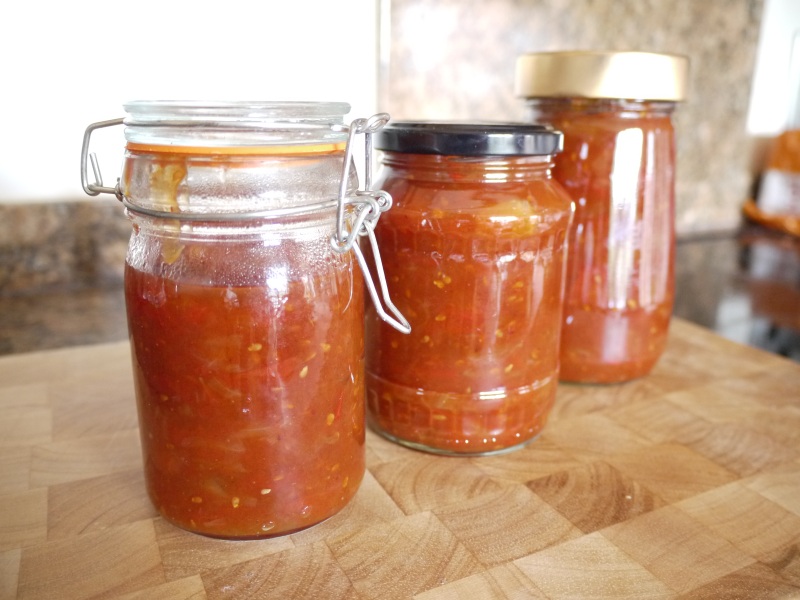
Anyway, despite a burnt lip (hot chutney is hot, who knew?), I made up my fiirst batch of red chutney for the year. Just ripe tomatoes, onions, sugar and vinegar this time around, mostly because that’s what I happened to have in stock. Helpfully, whilst I was waiting for it to reduce down during its two hour simmer, there was a Rick Stein video on Saturday Kitchen Live that showed how to make Sri Lankan Chutneys. My approach is to reduce the fruit down a bit, then add all the other ingredients and then simmer it for ages and ages to get rid of most of the water. This has the advantage of producing a very deep, rich flavour, but it also very much reduces the fruit and probably the quantity of output. The approach on TV was to do most of your reducing at the start of the cooking process. Mix the vinegar and sugar at the start, add whatever spices you’re adding (a lot more than you might imagine) and then reduce that to a thick syrup as quickly as you can. Burning to the bottom of the pan should be much less of a problem because there’s only the sugar that could caramelise. Then stir in the fruits, whatever you’re using, and give it the beans for about 20 minutes. I’ll be giving that a whirl when it’s time to make the Green.
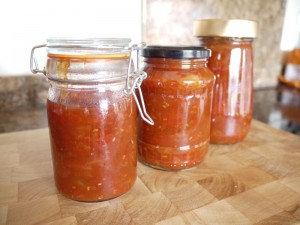
Tomato chutney

Potatoes and Elderpples

“If only we had some potatoes for tea tonight”

Thus heralded the results of my vaguely scientific trial, does one really need to earth up potato crops to maximise your dinner?

My crop of potatoes were carefully grown in a couple of surplus buckets and started off as a couple of supermarket potatoes that I’d left for too long and had started chitting on their own. They’re one of my favourite varieties, Charlotte, coping well with any use in the kitchen and still being reasonably early in the year.

I’m not the only one enjoying home grown potatoes at this time of year, but I do think it’s one of the more interesting crops to harvest. All you can see during the growing season is an increasingly straggly stem, the mystery of how successful you were isn’t dispelled until you start rooting around for the, err, roots.

Bucket o spuds

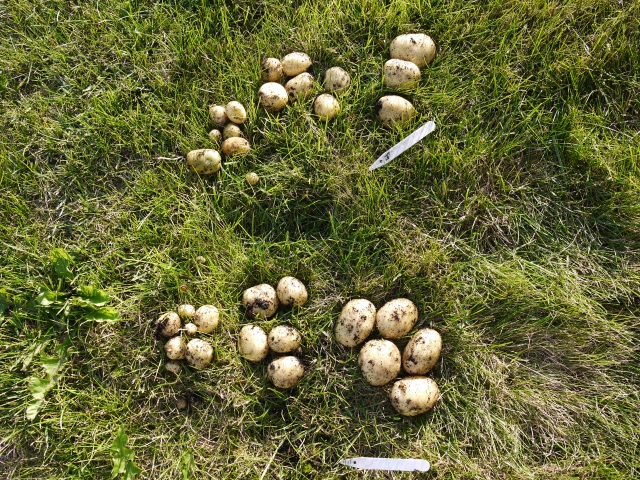
The bucket that I earthed up probably won the contest by two medium sized tubers. The lazy version had quite a few roots near the edges of the bucket but nothing in the middle, whereas the second layer of compost in the earthed up bucket had extras in the middle. It had none in the upper layers of compost, despite the stem and leaves growing on to match.

Potato trial results

The results. The top row was from a potato left in some compost and forgotten about, the bottom row was earthed up 4 or 5 times over the growing season.

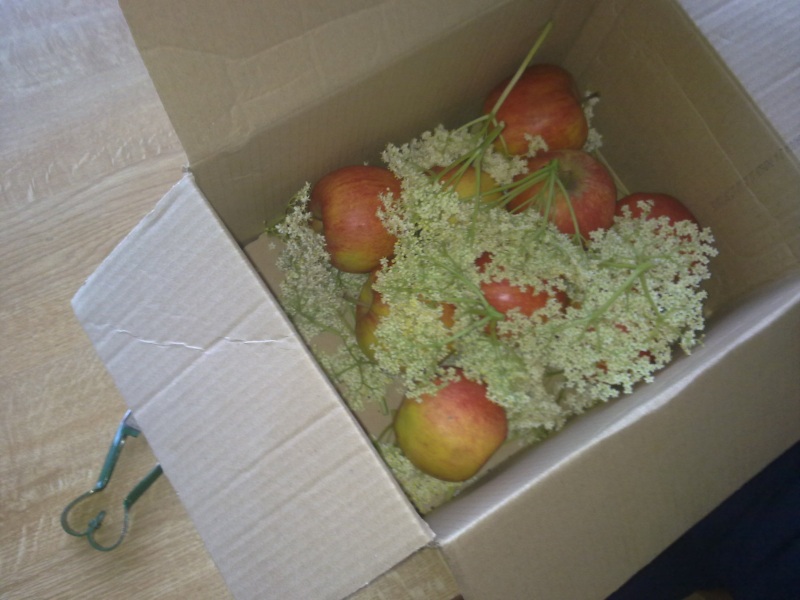
Apples packed with Elderflowers

My holiday was well timed to help with another experiment. When we were at the NEC in June, Alys Folwer mentioned that apples packed in Elderflowers for a month came out tasting like pineapples. Well, going away for three weeks seemed an ideal space of time to try it. We caught the tail end of the local elderflower crop, but there were plenty of creamy clusters of flowers in the hedgerows, some were even without bugs.

Apple and Elderflower Crumble

The answer? Perhaps I didn’t use sufficient flowers. They scented the house gloriously for a week, but the apples just tasted like both apples and elderflowers. I probably should have packed the apples in something too, they were somewhat bruised at the end despite not having been moved about. They still tasted good, so we combined them with a few spoons of last year’s Elderflower Cordial and turned them into an extremely summery Apple and Elderflower Crumble. Served with a generous helping of Yorkshire Vanilla Ice cream.