Category Archives: General Gubbins

2010 Food Festival, Part 2.1

We’re focusing more on the local provenence theme for the second helping of the food festival (from just the three weeks ago now). This time I was lucky enough to be joined by some of my family which made things way more fun, the wine fair especiallly benefited from a sense of smell and having enough people to stand a chance of covering both the whites and the reds.

After a dawdle around the market stands, I haven’t yet found a use for the great slab of Cumbria pancetta from Shaw’s, that could take some eating..

We started back in the increasingly familiar demonstration tent, with another short rant from Food Consultant Phil Leverington about excessive supermarket packaging costing us an extra £465 per year on average. With the cooks from one of Leeds’ vegetarian Indian restaurants stuck in traffic, he stepped in to whip up a demonstration with whatever ingredients he could beg, steal or borrow from their prep kitchen and the market outside. The answer turned out to be wood pigeon breast from Shaw’s meat, with smoked bacon mashed potato (big waxy spuds, not floury ones) and a sauce made by reducing some bramble infused whisky.
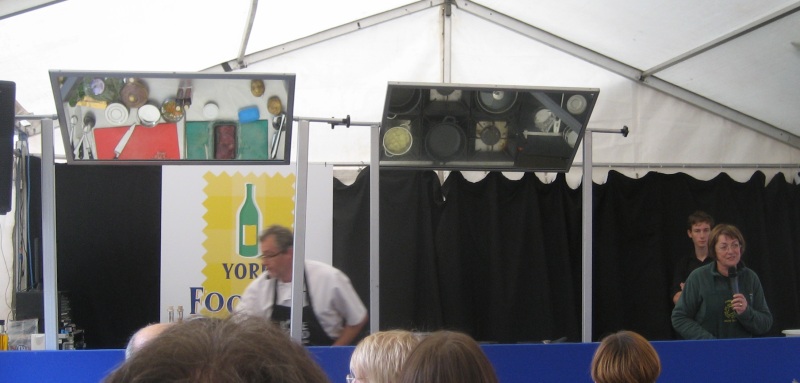
Food demo on left using ingredients from producer on right

How tracable do you like your sheep?

The demonstration was interspersed with short talks by the people who produced the ingredients on show. The first up was Rosemary Wass of Newfields Organics, who’s been producing seasonal vegetables from her 25 acre farm in Fadmore for 18 years. We heard from Adam and his Yorkshire rapseed oil, which carries half the saturated fats of an olive oil and doesn’t burn anything like so easily, which is handy when stirfrying.

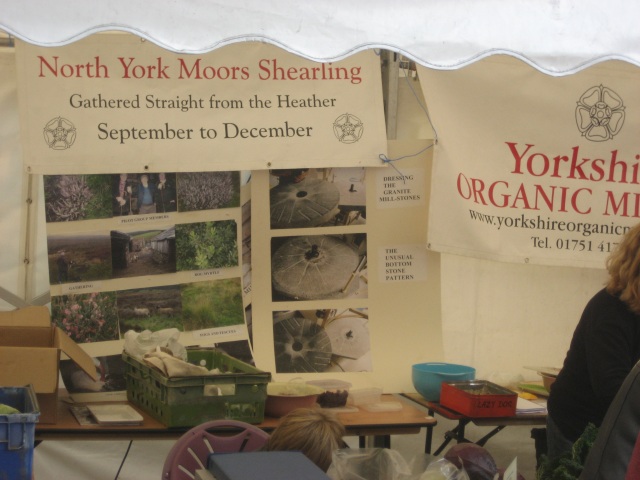
Topically, we also heard about Nelly’s moorland Shearlings, which I read about the other week. The jist of this community supported agriculture scheme was that each consumer signed up at the start of the 8 month season to buy the equivalent of one (1) Shearling sheep, delivered every four weeks in manageable, ready to cook, cuts. I haven’t yet worked out the difference betweeen Shearling and Hogget, they both seem to be names for sheep that are slightly older than lambs but haven’t got as far as mutton, so should be tender but more flavoursome. Overall, it worked out at £7.50 per kilo which is incredibly cheap when you compare it to 3 week hung longhorn sirloin steak (£24 / kg), and still reasonably cheap when you compare it to supermarket sourced lamb (6-13 / kg, depending upon the cut. or 25 if you get the who-the-heck-would-pay-that-much-for-get-thee-hence-to-your-local-family-butcher-priced rack of ribs). I didn’t bite though, I’d rather pay a bit more and buy it from the local farm shop when and if I want it, rather than signing up for a major quantity of meat that we might not even like eating. I don’t get through all that much meat in a given week, so we’d run the risk of eating nothing but Shearling between now and next Easter. Nice idea, I can see why that business model is in the press a lot in recent years, but I’d need more hungry mouths to feed before signing up.

Most of the afternoon was spent spinning gently round round the Field and Fawcett Wine Fair, which I’ll come onto in a later post, once I’ve finished decyphering and dereferencing our notes (apparently we quite liked table 6 wine 8 and table 2 wine 7. so there you go, another wine fact!).
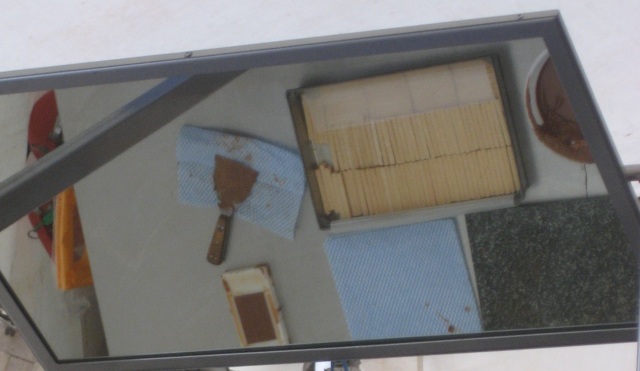
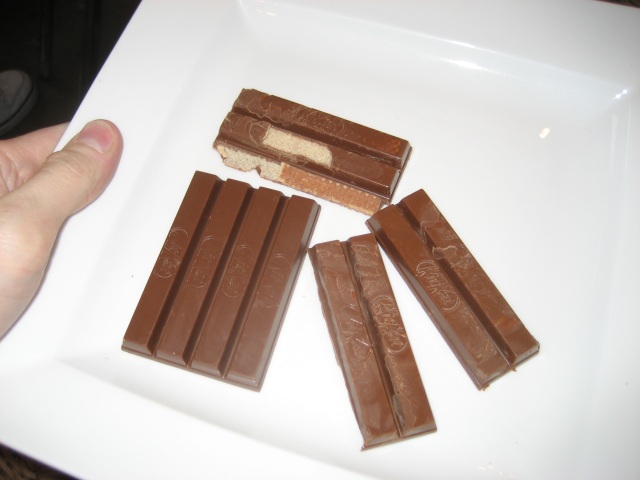
Making a kitkat. tray of biscuits, choc, slab, cold chisel and filled mould.

Kitkats. Spot the pro amongst the amateurs

We finished up with a demonstration from a company that’s been in the city for a year or 148, two people from Rowntree’s experimental kitchens were showing us how easy it isn’t to make Kit Kat’s by hand. They glossed over how they turn the individual slices of wafer into the stacks in the middle of the biscuit, probably either a trade secret or just not very interesting to watch. Like last week’s chocolate demonstration, they tempered their melted choc by working it with a trowel on a marble slab until it got to the correct temperature for adding to the 4-finger mould. By hand, they can turn out several hundred of these each day when they’re running small scale trials of different chocolate mixes.

A few willing volunteers from the crowd stepped up to try their hand with varying degrees of success, mostly the choc wasn’t at the right temperature or wasn’t fully worked into the mould so it all fell apart at the seams. Tasted alright though.

I’ll finish this off with my take on what to do with some hot-smoked duck I picked up from one of the marketeers, a bit like a salad nicoise but with eggs, quick-pickled tomatoes, beetroot and chard from the garden, salad leaves from Thirsk, cider spiked Wensleydale and the smoked duck from (can’t read notes).
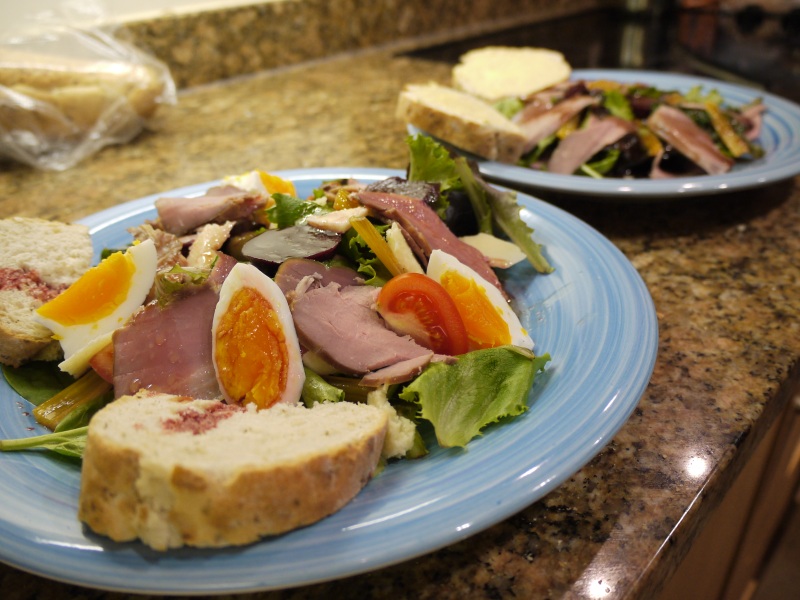
Smoked Duck Salad
2010 York Whisky Festival

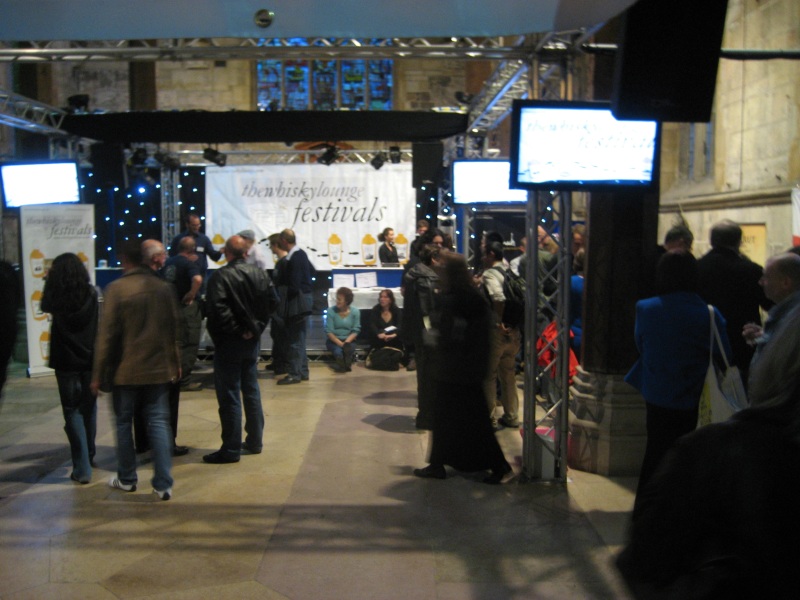
Hopes were high for this highlight of the York Whisky calendar, the festival’s massive success in other cities has helped bring in record numbers of exhibitors which combined with the day split into two sessions had meant more people than ever before have the opportunity to learn about and taste some of the best whiskys in the world. This is going to be a lot of words.

The first exhibitor I spent time with was Compass Box. This bold company has spent the past 10 years working on their own bespoke maturation and vatted malts to produce some very interesting drams. Their first attempts at adding a year or two of extra maturation in european oak or a sherry cask were foiled by the SWA, who flexed their muscles and said No they’re not allowed to sell whisky that was aged in a normal bourbon cask that had a few staves suspended in the middle of it. They fixed that by retaining the services of a cooper and making their own barrels out of used bourbon staves and brand new european ends.

The Whisky Festival

Their core range of five whiskys is well documented on their website and we were guided through them by an exhibitor who knew his range well. I wasn’t too fussed about Asyla, a 50/50 blend of malt and grain that was summery and fruity but lacked punch. I skipped Oak Cross, which looked designed to appeal straight to the Bourbon crowd and moved onto The Spice Tree. This strong, spicy and zingy dram made me mentally sit up and start paying attention, which was just as well because their Peat Monster packed a real bite. It had many layers of smoky, spicy, salty heavy oak Islay goodness and for the third dram of the evening boded very well indeed. Next up was Hedonism, which was very new to me. It’s a blend of 3 grain whiskys, matured in the usual way for between 20 and 29 years. It started subtle and creamy, built through a pile of spice and ended quickly with a short, sweet finish. I found it hard to quantify because I hadn’t had matured Grain whisky before, but it was very characterful. Unfortunately its price reflected the very limited supply, so I left empty handed. But not before trying their Orangerie concoction. They took their Asyla whisky and infused it with a big pile of oranges, so whilst it’s not just whisky any more, it’s bound to appeal to some people. I wasn’t one of them, it was sweet, tasted of nothing but oranges and its smell was square in my deadspot. However, my description of it to my friends and family have left them all hunting it, so it can’t be so bad.

Next up was Berry Brothers, who had managed to whittle their full range down to ‘just’ the 20 or so bottles on show, which was way too many to try to get through in the time. The first to stand out was a dark, richly oak-aged Trinidad rum which got the thumbs up from the whisky fans who hadn’t come across it before. Teaninich is a large Diageo speyside distillery that puts out a maximum 2.7 million litres of spirit that mostly goes into Johnnie Walker, single malt bottlings are rare and independant ones doubly so. It’s a good example of the robust Highland character and was remarkable.

With a regretful glance at the watch, I pressed onto the Morrison Bowmore stand to briefly explore their Auchentoshens. Auchentoshen is unusual even for a lowland because it actually does triple distill its spirit. For me, the money was with their Threewood. Their nutty spirit is aged for 12 years in bourbon, then 1 year in Olosoro and yet another year in Pedro Ximinez butts. You’d think you’d want a flake in that after all that time with the sherry but I found it characterful and interesting.

LVMH were well represented by Glenmorangie and Ardbeg. Ardbeg rarely disappoints and their Uigeadail was up there with the best, retaining its stereotypical flavours but managing to turn them up to 11 without resorting to bottling at full cask strength. We had a detailed Glenmorangie Tasting earlier on this year, but felt it would be a useful test to try the Sonalta again, in the interests of science of course.. Yep, just as good as we remembered, retaining the core characteristics of GlenM balanced with some body from the sherry.

Despite the siren song from the people serving hot falafels or pork butties in the corner, enough people in the crowd had asked us if we’d tried the Bonny Haven yet for us to think this was worth fixing. Whilst Eddie was starting to announce the best of the festival tasting, we pounced on the Creative Whisky Company to see what all the fuss was aboot. They’re an independant bottler and have a strong range, not too big and not too small. Their 4 year old Bunnahabhain was just stellar for a young spirit. I don’t know quite how they talked the distillery out of this particular barrel, but it was an unusually clean and clear taste, capturing the sweet peaty essence of that corner of Islay with a generous warming finish. Indy single cask bottlings are always limited in supply, but this was almost comic with the tally ticking down of how many they had left under the table. 11 bottles remained when we were there. I just had time to sneak in a try of their Glen Ord. whilst reliable, it’s still something special and I don’t think I’ve got anything like it in my cupboard at the moment. It’s a true heavyweight Highland spirit with big spicy notes of fruitcake finished off with smooth vanilla. It’s unusual to find it as a indy single malt, the majority of its 3.2 million litre capacity is used for Diageo’s blends.

At this point we had to dash off to be spoilt for life by the Best of the Festival Tasting, which I think is worth a post all to itself so I’ll save trying to decipher those notes for another day.

Eddie’s got a good selection of photos up of the event, including a couple of me doing my bit schilling for Bruichladdich in my Academy t-shirt. If I can’t show it off there, when can I?

I will mention that on my way out, I paused to buy one of the last three bottles of Bunnahabnain 4 yr old. I thought it was sufficiently unusual and interesting to pass by and I haven’t got anything quite like it already. And yes, I did get in trouble for trying to jam yet another bottle into the cupboard.

Overall, I found the evening to be slightly disappointing and totally overwhelming in equal measures. It was a bit annoying that all the drams I made notes about were the wrong side of £50 per bottle. I know they’re special, but a whisky has got to be truly stellar for me to justify that many spends, even when drunk and silly in charge of a credit card. I’m also a bit worried about my tendancy towards not missing out on something that’s strictly limited edition. Yes, it won’t go off when it’s in glass and it can be an investment and all that. but it’s also flipping expensive..

Going to the best of the festival masterclass meant I had the chance to sample and learn a bit about some fantastic drams, total sensory overload. But it came at a price (and I don’t mean the cost of the extra ticket). I had the chance to look at less than a quarter of the tables and whilst I did come away both very merry and (it was an accident guv’ner) another bottle for the collection, there were many people I didn’t get chance to talk to and many characterful and unusual spirits I didn’t get chance to experience. That’ll teach me to hang about watching chefs play with chocolate rather than heading straight into the festival as soon as it opened, that was a crucial 40 minutes that I won’t see again. Manchester’s sold out, so I’ll just have to wait for next year. And the Springbank Tasting at the end of next month. Oh shame.

Slange Var!

2010 Food Festival, Part 1.1

Last Saturday was the first weekend of this year’s Food Festival which kicks off with the star event (for me at least), the 2010 Whisky Lounge Whisky Festival. To try to spread the word, it’s split up into two sessions this time, 4 hours in the afternoon, an hour off for the exhibitors to catch their breath and then 4 hours into the evening.

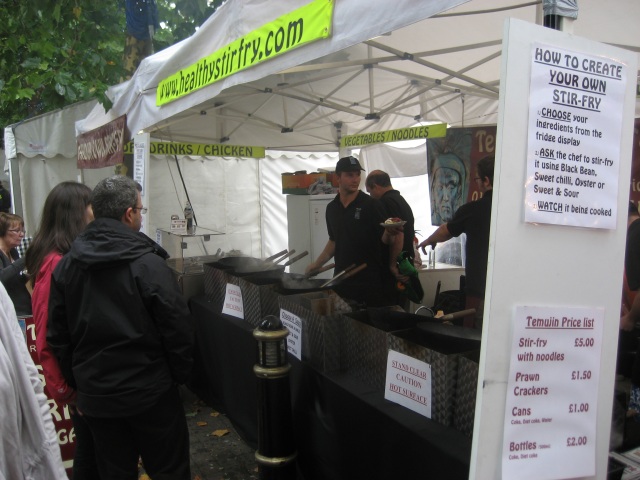
I didn’t want to miss out on the rest of the festival though, so I started mid afternoon with a demonstration from Temujin restaurant, who specialise in totally customised stir fries. The chef, who originally hailed from Zimbambwe, was clearly used to teaching a young audience, taking great care over explaining different colours of chopping boards and keeping raw meat apart from cooked. I’m not sure I’ll be duplicating his recipes at home though, our local supermarkets don’t yet stock farmed crocodile steaks. He knew his audience well, I was surprised how many people in the audience hadn’t come across ginger root before and thought it exotic and spicy. He had some interesting numbers to share, a professional gas powered wok burner gets through about 60,000 BTUs an hour into a single wok. No wonder it cooks through in 2 and a half minutes flat! For a comparison, a good home range might get through 20,000 BTUs per hour if all 5 rings are going at once.

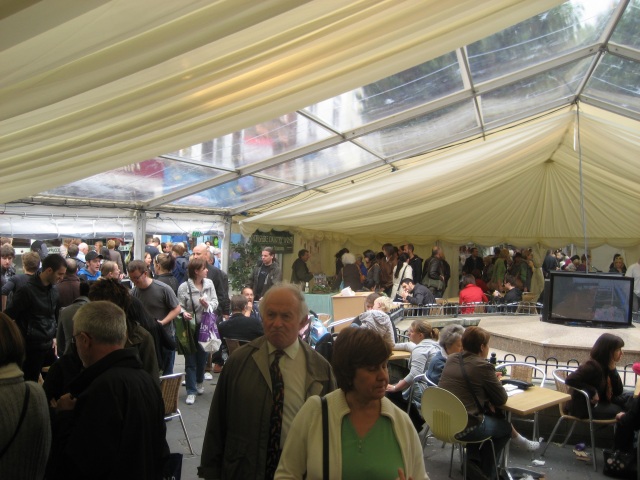
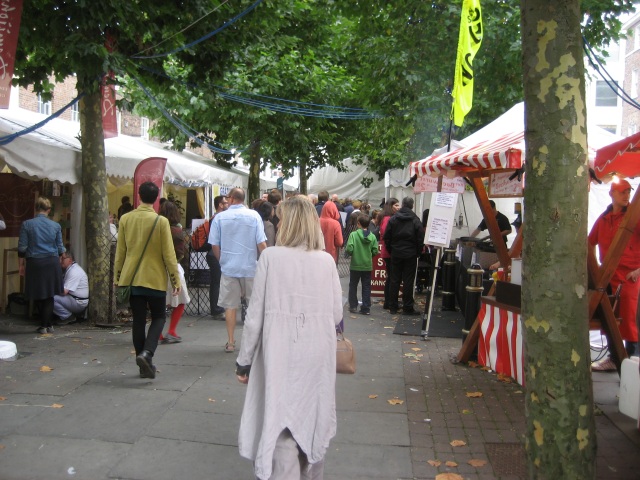
Crowds in town

Grazing tent

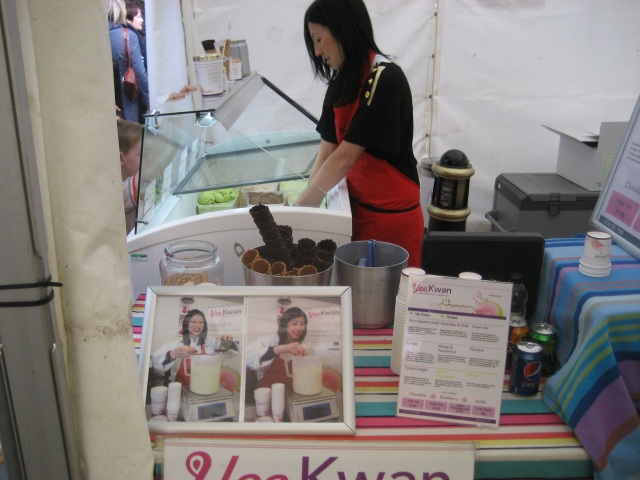
That was followed by a wander through the stands on Parliament Street to see what this year would bring. In their usual corner by M&S were Kippers By Post (.com), complete with a couple of market sized smoking huts to keep the smells wafting and make sure that demand is kept supplied. I’m not a fan myself, they’re just a little too fishy for my taste, but they’re an excellent example of picking one thing and doing it well. The fountain has been roofed over by a large tent, containing a variety of places to graze from, as well as a portable pub. One very topical stand was selling Yee Kwan‘s oriental inspired ice creams and sorbets, which confirmed my suspicions that it’s possible to make ginger ice cream and that lemongrass is just fine to infuse into syrup when making a sorbet. Watch this space.

Oriental Ices

Bespoke Stirfries in a tent

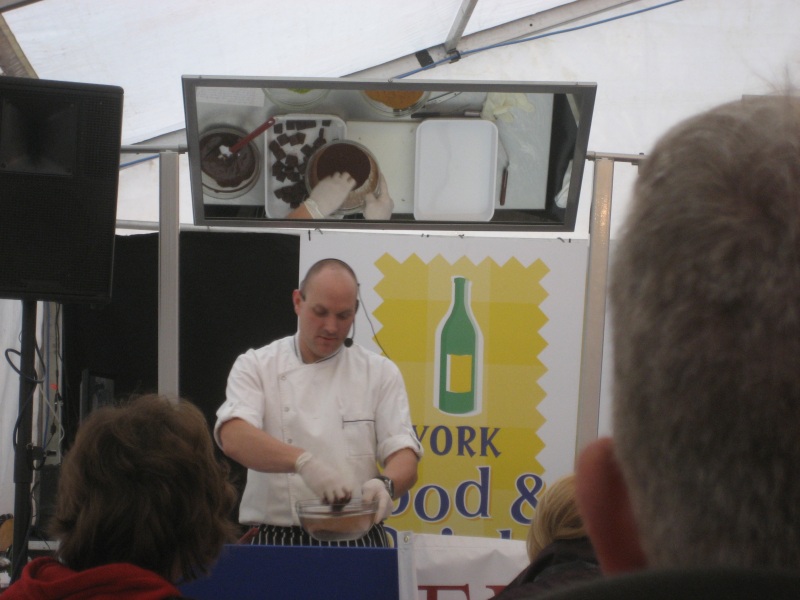
A generous vension burger provided an early evening bite whilst I wandered over to the demonstration tent for the twilight chocolate session. The head chef from a nearby hotel showed us how to hand make ganache chocolates and how easy it is to make a popular type of branded aerated chocolate bar. Luckily I can read the notes I made this early in the evening, because there were yet more numbers to keep track of. Chocolate is a precise science!

So, a base ganache mix is 640g of 50-60% chocolate, 250g of cream, 70g glucose and 60g of a liqueur such as Grand Marnier or Kirsch. Boil the cream to sterilise it, makes the finished product keep that much longer. Mix in the glucose to the cream, then let it start to cool. Use the heat within the cream to melt the chocolate through the mixture. Chocolate must not be heated above 45C. Likewise, chocolate and water don’t mix, so be careful of condensation when setting in the fridge. Stir in a handful of unsalted butter to give the chocolate a shine and to help it stay set at room temperature. Pour into a greased, lined tray to set for a few hours. Then cut into squares. You can cover your ganache in a variety of things, cocoa powder or ground up nuts are popular choices. To make the covering stick to the ganache, you need yet more chocolate to use as glue. This time the melted choc should be at 32C so that it just covers the cubes. Use gloves, as this is a sticky operation!

Coating ganache

To make bubbly chocolate, you need one of the professional metal cream whipping bottles that you see on the TV. Melt about 1kg of good milk 35-40% choc. Don’t use dairy milk and friends because they’ve got a high vegetable fat content that doesn’t play nice. Pour into the bottle and use two cylinders of gas to charge it. Shake up the melted choc through the gas, then spray it all out into a greased, lined tray and leave it to very gently set. don’t bash it, or you’ll knock the bubbles out.

He paid careful attention to tempering his chocolate by gradually cooling it by working the choc with a scraper or spatula on a marble slab. This does things to the crystal size and alignment that gives the chocolate its glossy finish and a good clean snap. Otherwise it’ll crumble.