Category Archives: Food

I’m quite interested in food. Not just the eating, but everything from growing the ingredients, fundamental methods of cooking and preserving that have withstood the ravages of time and laziness to the fusion of influences from across the world.

This section of my website generally holds recipes that I value, either because I think they’re interesting enough that other people might want to read them too, or simply so that I can find them again in the future.

Herman, the friendly cake

Hello, my name is Herman and I’m a sourdough cake. I need to be looked after and not put into the fridge or I will freeze to death. However, I make a very tasty cake, so I am well worth the effort and you can share me with your friends to spread the joy! I’m not as bonkers as I sound, these people have also written about me.
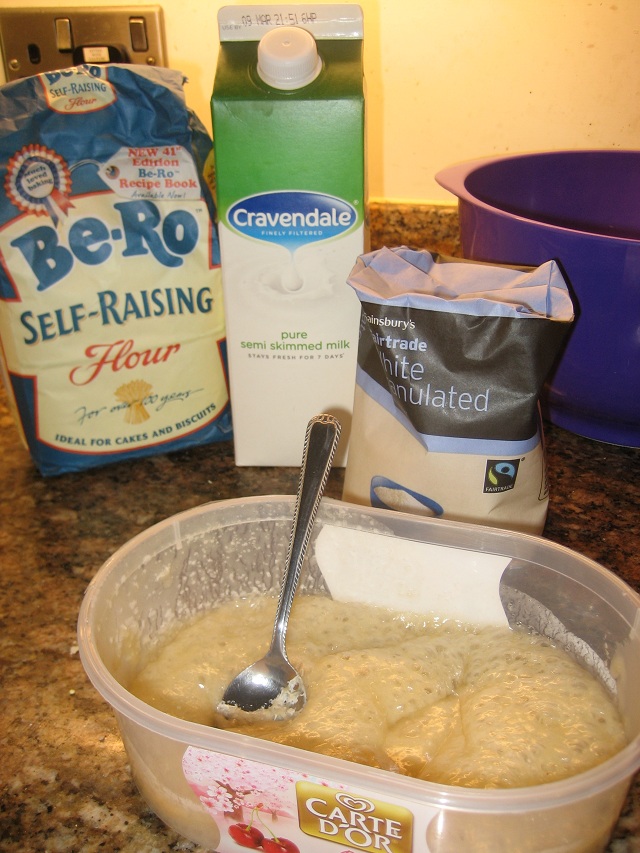
Herman on day 1

To look after me properly, you need to follow these simple instructions:

Day 1 – you get a dollop of Herman, take my lid off, put me in a large bowl and leave me at room temperature, covered with a tea towel
Day 2 – stir me twice a day
Day 3 – Same as day 2
Day 4 – I am hungry! Feed me 200ml milk, 200g plain flour and 250g of sugar
Days 5, 6, 7 and 8 – Stir me twice a day
Day 9 – I am hungry! Feed me the same as day 4, then divide me into 5 equal amounts. Give some sons of Herman to your friends with a copy of how to look after me and keep the rest for tomorrow
Day 10 – It’s cake time!

Ingredients

Makes one large cake or 12 big muffins
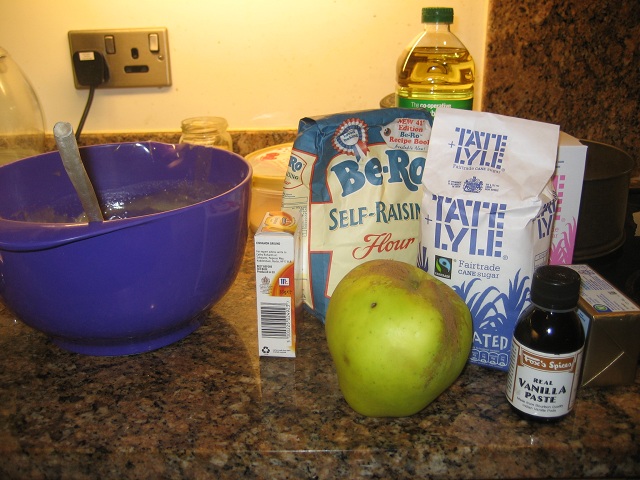
Ready to bake!

Cake
1 portion of Herman
150ml vegetable oil
3 eggs
250g sugar
350g self-raising flour
1 tsp salt

and then any flavour combinations you like that add another 200g of solid to the mixture

I added 2 teaspoons of ground cinnamon and 200g of grated baking apple, but you could also use things like nuts, chopped chocolate, rum-soaked raisins, raspberry and white chocolate, maple syrup and pecan nuts, black cherries and dark chocolate, or make lots of muffins and use all of the above!

Filling
75g very soft, room temperature butter
200g icing sugar
quarter of a teaspoon of vanilla paste, or the flavouring of your choice

Icing
100g icing sugar
3 tablespoons water
Half a teaspoon ground ginger

Method

Stir everything all together in a large bowl and decant into your cake tin or muffin trays.

A very firm mixture

This will make a very stiff mixture, but don’t worry about it not rising, it’s got both baking powder AND yeast in it, so it will comfortably double in volume when in the oven.
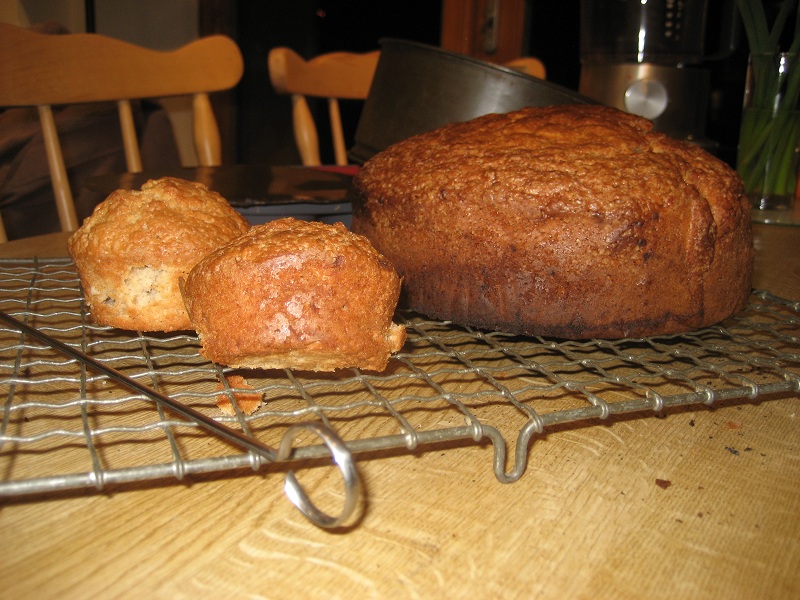
Baked to a golden finish

Bake at 180C for 40 minutes for muffin sized cakes or 75 minutes for a big cake. Everybody’s oven is different so always check whether the centre is cooked through with a skewer.

Leave it to cool for 10 minutes before turning out onto a rack to cool fully.

I then sliced mine in half with a breadknife and filled with buttercream filling (beat the butter with an electric whisk and gradually add in the icing sugar until it’s combined, light and fluffy, then stir in your colouring and / or flavouring).

The icing was a simple water icing with a hint of ginger, very very slowly add water to some icing sugar until it comes together into a pipable consistency, then squiggle over the top of the cake.

Share, and enjoy!
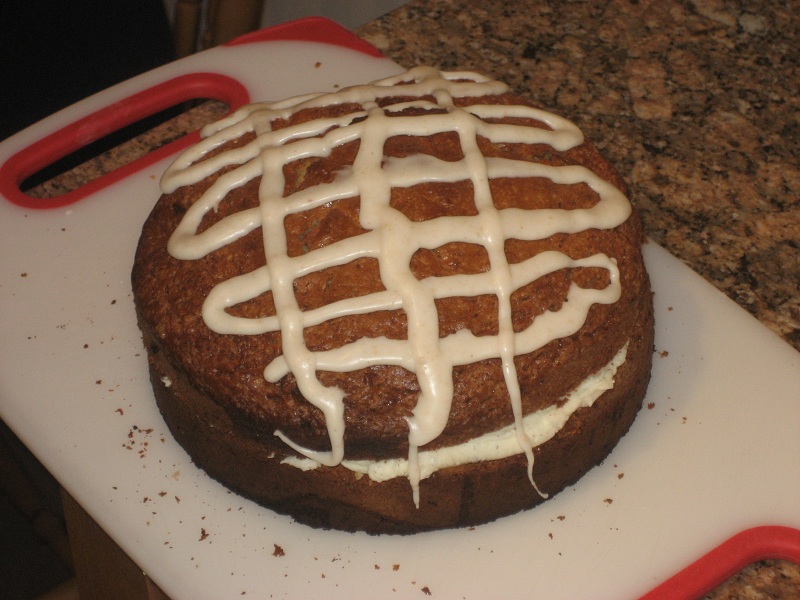
Frosted and iced up
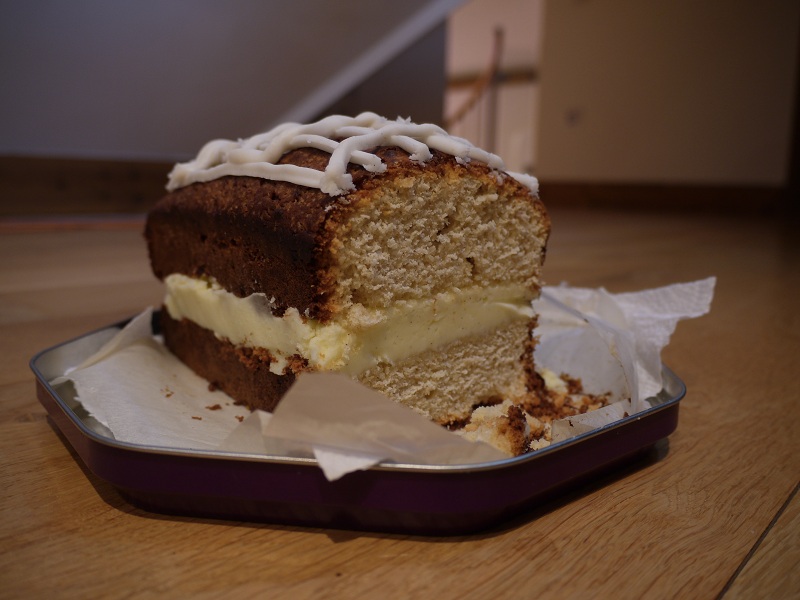
Or baked as a loaf
Home Fermented Ginger Beer

I had a vague recollection of a River Cottage recipe for knocking up Ginger Beer in just a few minutes, and as I rather like drinking the stuff, was bored and was having a weekend of doing a lot of things with yeast*, I thought I’d give it a try. After all, how hard could it be?

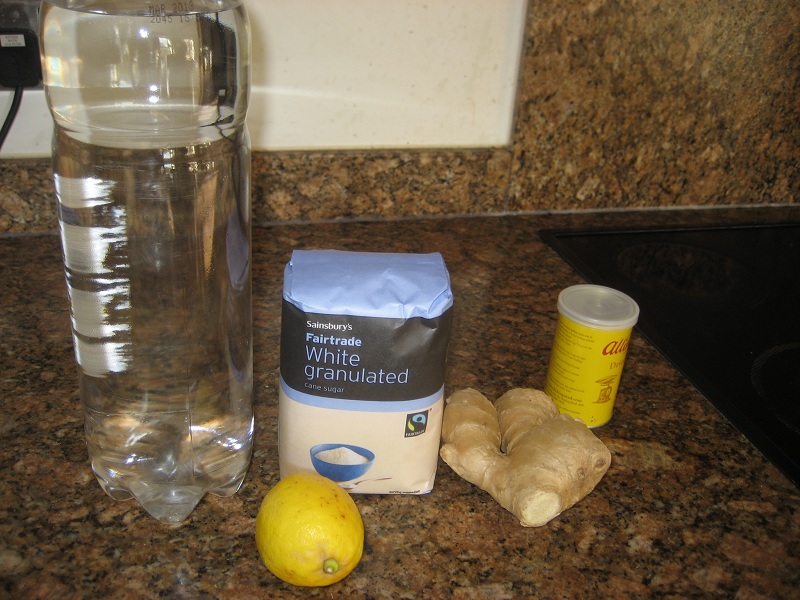
Ingredients

Makes about 1.8 litres

1600ml water – w/o chlorine if possible, but the lemon juice should offset that
1/4 tsp yeast
225g sugar
juice of 1 lemon
3 big lumps of ginger – grated not chopped, you want juice
2 teaspoons of runny honey

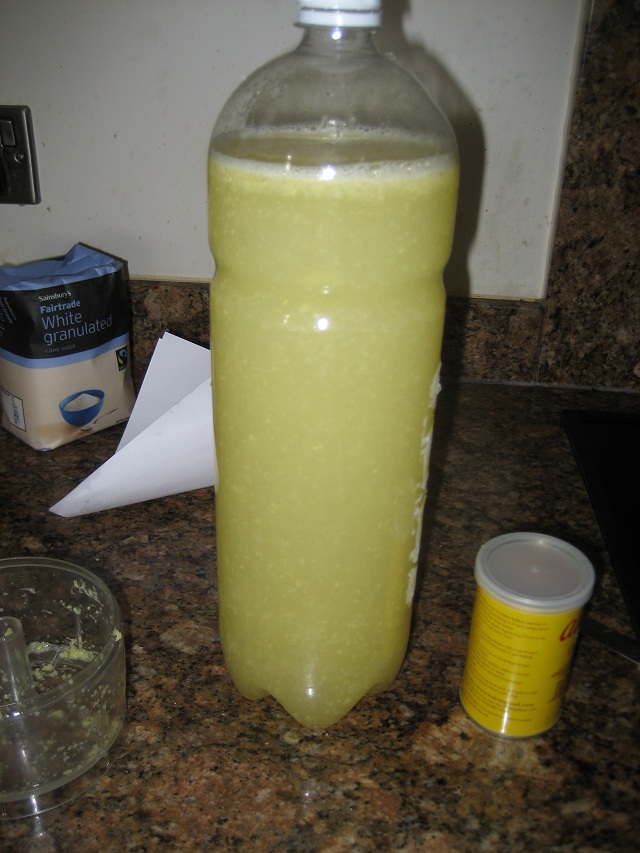
Ginger Beer Ingredients

You need a sterilised 2 litre plastic bottle, the type that fizzy drinks and water come in. Rather than sterilising it, I just paid 17p at Morrisons for a new one and got the water thrown in too.

You also need a device to get the Stuff into the bottle. I used a rolled up piece of A4 paper, but many people favour plastic funnels. If your funnel neck is narrow, you’ll likely need a chopstick to poke the mixture through when it gets stuck

A 2 litre jug helps and you need some cheesecloth or muslin or something to use as a fine meshed filter. A fine sieve might also do it, but would be annoying to clean.

Method

You have a couple of variables to adjust depending upon how gingery you like it and how fizzy you’d like it to be.

If you like a mild flavour then chop your ginger (or blender it), whereas if you like a fuller flavour then grate it. Grating releases more of the juicy bits from the stringy fibrous bits of ginger root. If you like it fizzier, then use half a teaspoon of yeast, but please do be careful not to explode your bottle all over the place by over pressurising it. Do not use a glass bottle.

The method is essentially mixing up all the ingredients and get them into the bottle, I’ve found it easier and less messy if I do it in stages.

Grate your ginger into a 1 litre jug. To this, add the lemon juice, the honey, the sugar and about half a pint of water.

Mix it all up and pour it into your bottle, using more water to get the solids out of the jug and into the bottle.

Fill the bottle about half way, put the lid on it and shake it up a lot to get it all properly mixed together.

Carefully spoon in the yeast and top up the water until there’s 2 – 3 inches of air left. You need this space for the CO2 gas to expand into and to judge the pressure by seeing how squashable the bottle is.

Shake it up again.

All mixed up and ready to wait

Leave the bottle at room temperature for about 48 hours.

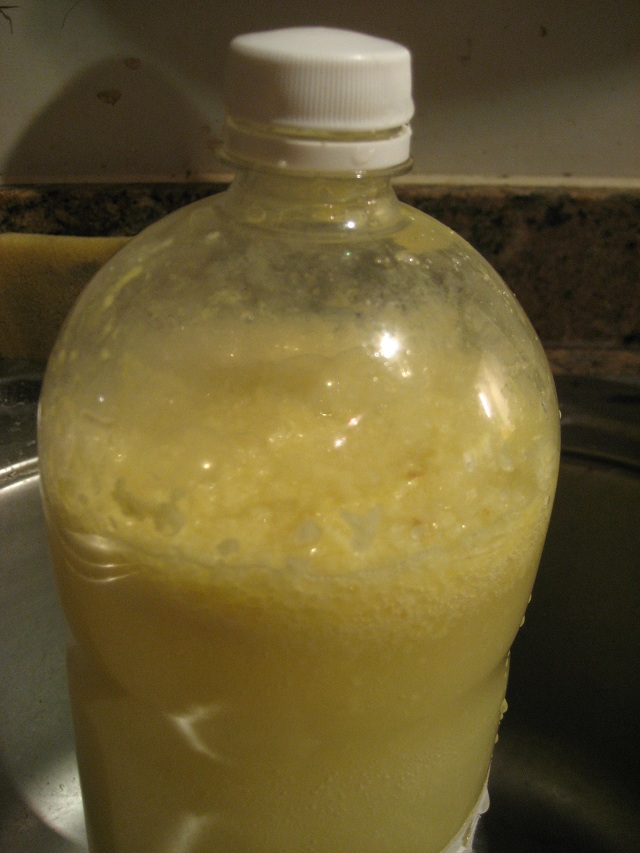
After about 12-18 hours, you should be able to judge progress by feeling the difference in pressure by squashing the bottle gently with your fingers. At the start it should be easily squashable. It’s ready when you can’t noticably squash it. You should also notice that most of the solids float to the surface, buoyed by all the gas.

Bubbly ginger beer after 48 hours

Very very slowly release the pressure. Take many minutes over this, unless you like ginger beer fountains.

Pour the mix through your cheesecloth back into your jug to remove as much of the solids and sediment as you can possibly manage, and then decant back into your now cleaned bottle.

Store it in the fridge until you want to drink it. Fridge means cold, so the remaining yeast will be much slowed down. A bit of yeast action is good though, because it will put the fizz back into your ginger beer after you let it all out when decanting it.

Enjoy over ice with a slice of lime, or mixed with some cheap blended whisky. I prefer it neat.

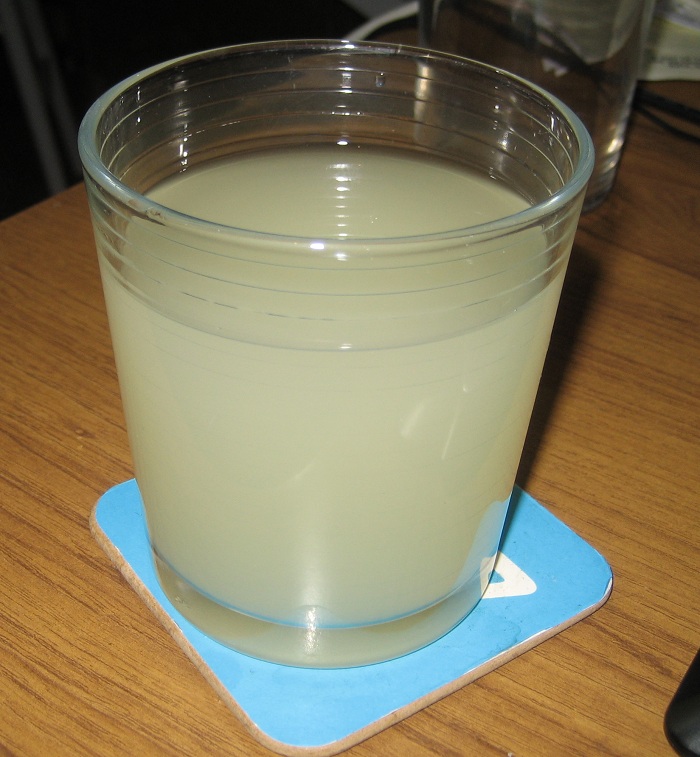
Finished, home fermented ginger beer

Apricot and Raspberry Ice-cream

Up until now, the ice cream I make at home is pretty much just that, frozen cream and milk. For me, this is easy to make and produces extremely satisfactory results, but it isn’t the softest to scoop once it’s been in the freezer for a week. Most of the world’s ice cream is based on a frozen custard, the idea is that the eggs help to keep it emulsified, so I’ve had an exploratory go myself.

I consulted with both Delia and Nigella and whilst they both agree on a basic custard recipe, it was Nigella who added the top tip of keeping the kitchen sink half full of cold water, ready to plunge your pan into it if you’re in the slightest danger of it splitting and turning into scrambled egg.

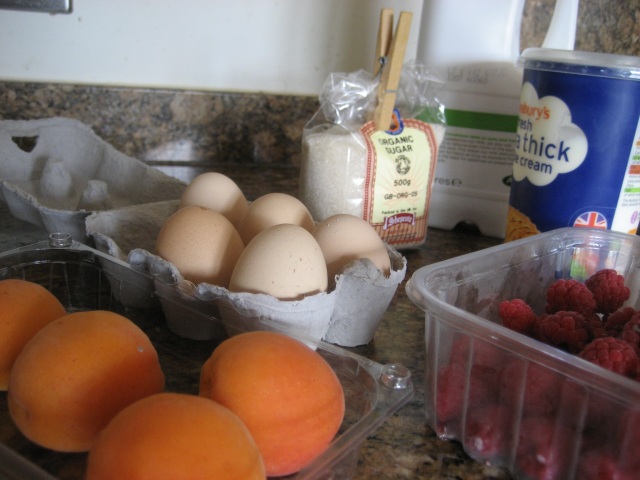
Whilst apricots and raspberries do go well together, this was more of an excuse to use a handful of fruit that had been sat around ripening for a while

Ingredients

Makes about 750ml

200ml double cream
400ml milk
3 free range egg yolks
110g sugar

4 ripe apricots
50g raspberries

Method

Start by making your custard.

Mix together the cream and milk, put it in a pan and start it warming up. You don’t want it to boil, but get close.
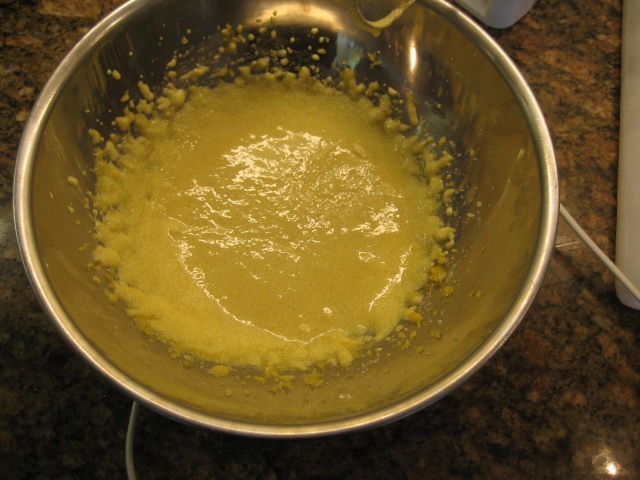
Whilst that’s heating, whisk together the egg yolks and 100g of the sugar until it gets visibly lighter.

Once the milk just starts to bubble, pour the hot milk over the egg and sugar mix and keep whisking.

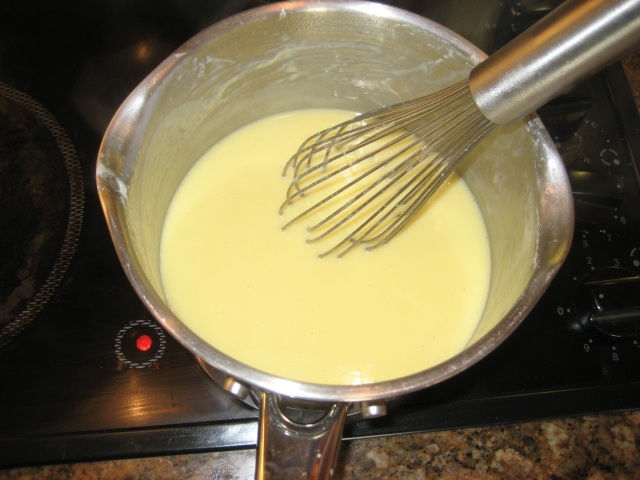
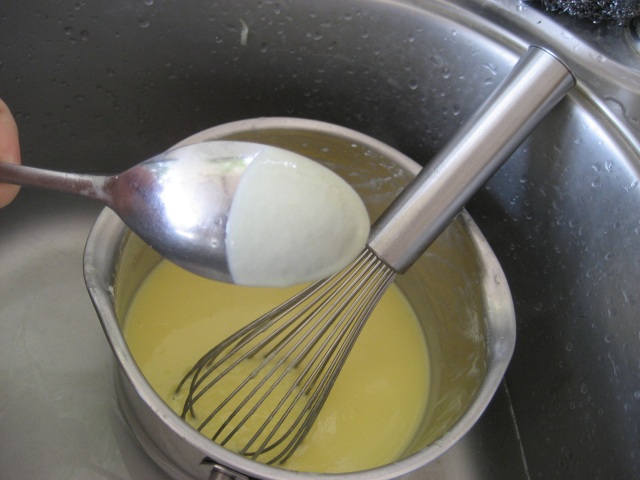
Put the mixture back into a pan and gradually heat it up, whisking or stirring all the while. It’s safer to heat it gently, but I gave it the beans (small ring on electric hob, I wouldn’t dare do that on a gas ring) and didn’t stop whisking. After about 5 minutes of this treatment, I could just start to see little bits of colour changes within the mixture, so it was straight into the sink of cold water and in with the electric whisk. The proper way to judge when it’s done is look for a velvety smooth texture that just coats the back of a spoon, it won’t thicken properly until it cools down to room temperature. Next time, I’ll give it 7-8 minutes on a medium heat and still lots of whisking.

Custard is just coating the back of the spoon

With your custard safe, it’s time to prepare the fruit.

Finely dice the apricots and stir them through the custard.

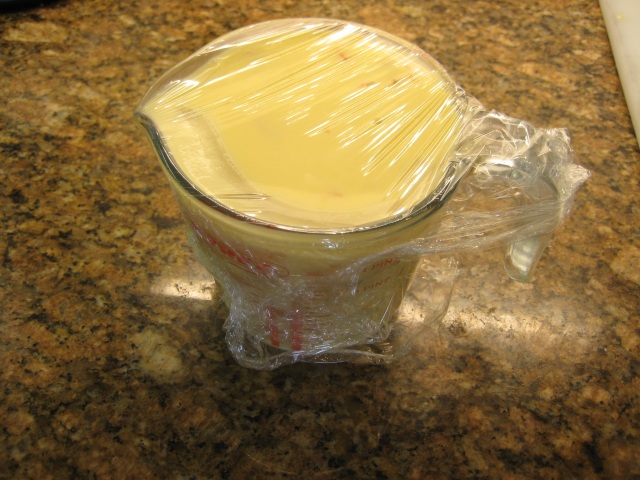
Pour it into a jug or tub to chill and cover it with cling film to prevent a skin forming. A skin isn’t the end of the world with this mixture, but it’s a quick way of wasting a whole lot of vanilla seeds if you’ve added a vanilla pod. Leave it in the fridge until it’s cold.

Preparing a raspberry syrup to swirl through the ice cream is easy enough, put a handful of raspberries in a pan with a couple of spoons of sugar and a couple of spoons of water. Let it slowly cook until the fruit starts to collapse, then finish the job with the back of a spoon. Some people sieve out the seeds for a purer look. Chill the raspberry syrup.

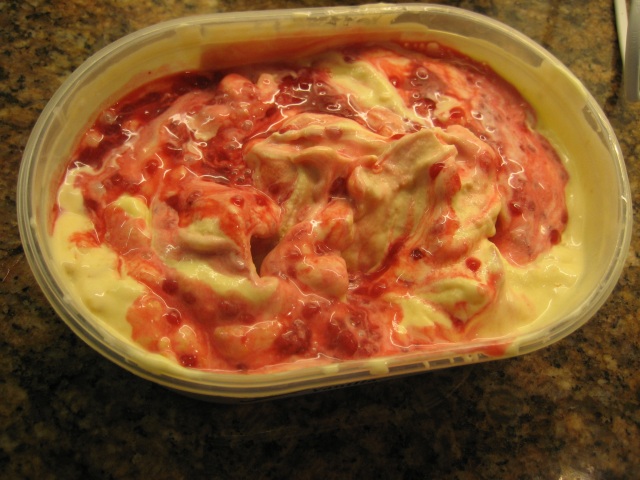
Churn the ice cream in a machine for 15-20 minutes and transfer it into your tub. Finally, spoon in the raspberry syrup and give it a swirl with the spoon or a chopstick and freeze it for a couple of hours before serving.

Apricot and Raspberry Ice Cream