Category Archives: Food

I’m quite interested in food. Not just the eating, but everything from growing the ingredients, fundamental methods of cooking and preserving that have withstood the ravages of time and laziness to the fusion of influences from across the world.

This section of my website generally holds recipes that I value, either because I think they’re interesting enough that other people might want to read them too, or simply so that I can find them again in the future.

Gooseberry and Elderflower Sorbet

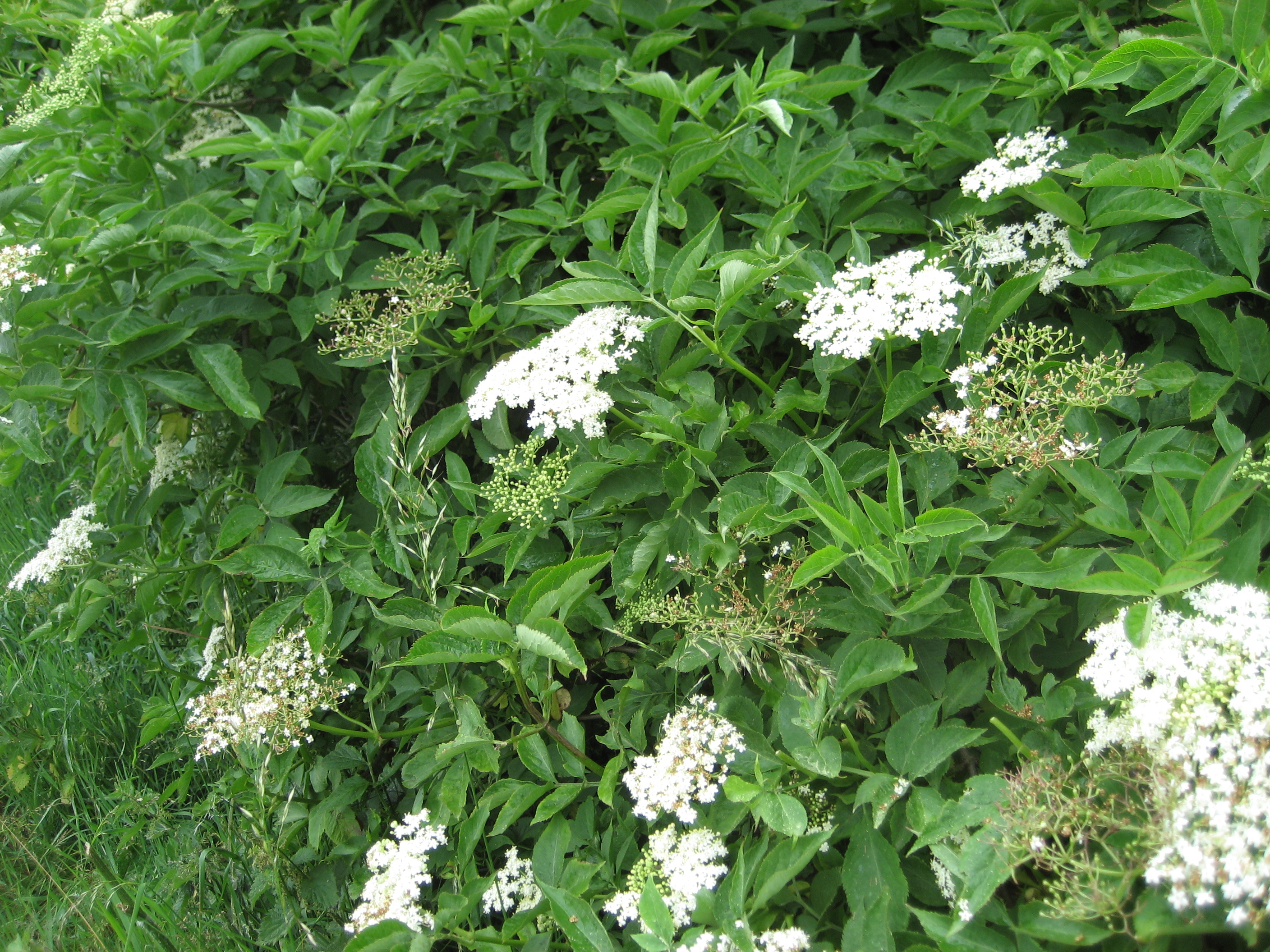
Elderflowers

I’ve come back to this recipe a few times now to use with my Ice Cream Maker
, so I’m writing it down somewhere I can find it more easily. It’s summery, tasty and Gooseberries are in season at the moment. Whilst they freeze well on their own, I think this is a nicer way of preserving them through the year. My home crop was pretty rubbish this year, I lost the annual fight with the Sawfly and my bushes managed a few small, sweet berries before the leaves were eaten away.

I get on ok using my homemade Elderflower Cordial but if you’re lucky it’s just still in season to use fresh elderflowers. To do that, boil up a few heads of elderflowers in the syrup for a few minutes, strain them and the bugs out and then carry on with the gooseberries.

Ingredients
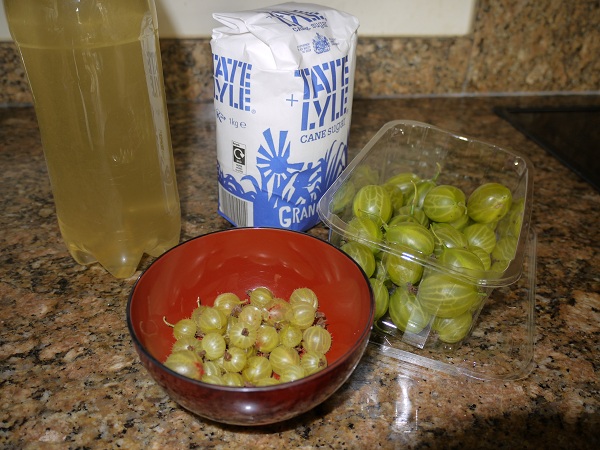
Ingredients

Makes about 750ml of sorbet

250g white sugar
250ml water
275g gooseberries
3 mint leaves
50-75ml Elderflower Cordial (to taste)
1 tablespoon of fragrant gin (entirely optional, don’t be tempted to add too much or it’ll never set)

Remember to freeze the ice cream machine’s bowl overnight

Method
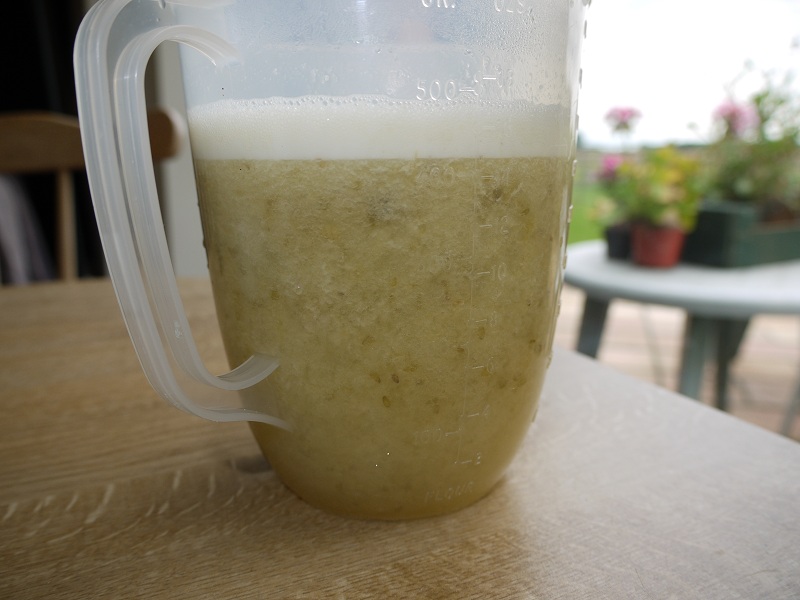
Cooked but not frozen

Top and tail the gooseberries and maybe chop in half if they’re particularly jumbo ones. Finely chop the mint leaves.

If you want your sorbet to look particularly green and taste strongly of gooseberries, use half the quantity of syrup.

Put the sugar and water into a pan and heat it up until it dissolves into a heavy syrup, then add the mint and gooseberries and simmer for a few minutes until they’re soft and squishy.

Take off the heat and blat with a stick blender until the skins have been chopped up. Stir in a glug of Elderflower Cordial and the gin if you’re using it, decant into a jug and chill in the fridge for a couple of hours.

Once it’s at Fridge temperature, decant it again into the final tub you’ll be using and give it an hour in the freezer to get a couple more degrees of heat out of it. Sorbet can be hard to churn using a passively chilled machine if it’s not already at 0-4 degrees C.

Now churn it for about 15-20 minutes, until it holds its own shape.
Put it back into the tub and freeze it until you want to eat it.
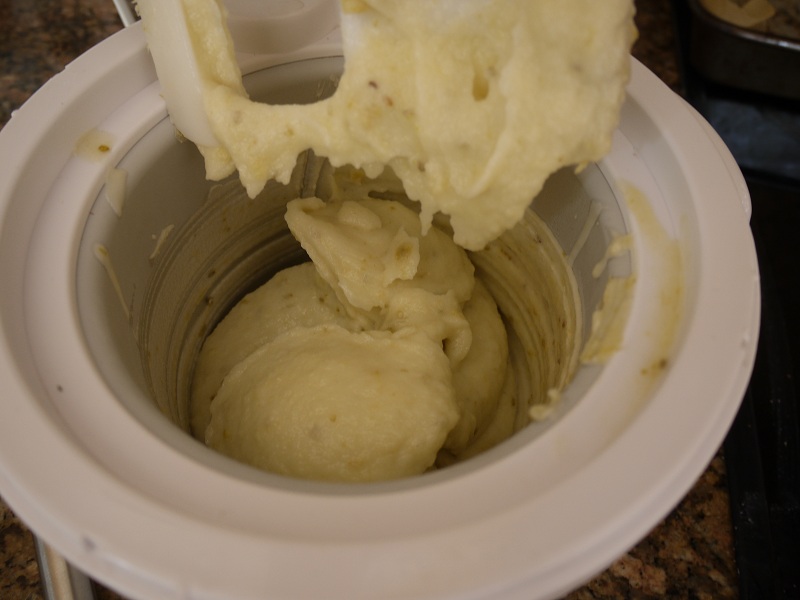
Churned Gooseberry and Elderflower Sorbet


Churned Gooseberry and Elderflower Sorbet
Elderflower Cordial 2012

Elderflowers

Our country has been graced with lots of rain and cloud these past few weeks and whilst it’s dampened many human spirits, the plant kingdom has also been slower than years past. What highly detailed scientific evidence do I have to back up such a claim? Well, the last week of June is when I make that year’s supply of Elderflower Cordial and the flowers were at the end of their season for the last two years, whereas they were only just coming out this year. Around these parts, they’re out for 2 to 3 weeks, so there we have it. Totally unconclusive science 🙂

Aanyway, this is the recipe I follow to turn these nice smelling flowers into a light refreshing drink that lasts all year.

Ingredients

Makes about 1 litre

25 freshly picked heads of Elderflowers (Sambucus subsp somethingOrAnother)
1 small lemon
600ml water
800g white sugar
35g citric acid

Cheesecloth / Muslin / boiled J-cloth
Huge bowl

Method

Throw it all into a bowl and pour over the hot syrup

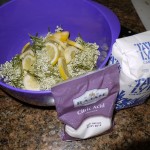
Pick through the Elderflowers, shake off the worst of the little black bugs that you’ll inevitably get. Put them into a huge bowl.

Thickly slice the lemon and put that into the bowl too.

Put the sugar and water into a pan and heat it up so that the sugar dissolves into a heavy syrup. Take it off the heat, stir through the citric acid powder and pour it all into the bowl.

Cover the bowl and leave it for at least 1 day, preferably 2. I like two because I think it gets more of the floral scent out of the Elderflowers, although you need a bit less lemon or it will get too pronounced.

Pour everything through some muslin a couple of times to filter out the flowers, lemons and the glace insects and pour into a bottle for safe keeping

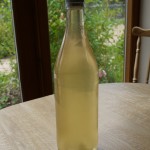
Finished Elderflower Cordial

Homemade caramelised onion, feta and sun dried tomato tarts

This is a recipe in two parts and is one that I make of a lazy weekend when I want something light, tasty, and homemade. The pastry keeps in the fridge for a couple of days so you can make a bit more or less, keep the 2:1 proportions but increase or decrease as necessary. It takes a bit of time, but much of it is waiting for things to cook.

I’ve had limited success making my own pastry in the past because I struggled to rub the butter and flour together without letting the butter warm up too much. However, I was lucky enough to get an awesome Kenwood food processor which makes shortcrust pastry trivial, the 2 litre ones don’t take over the kitchen quite as much as their bigger brethren and you can even get away with two-thirds sized bread doughs in it, very recommended.

Rosemary Shortcrust Pastry

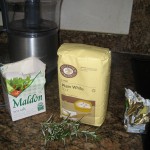
Pastry ingredients

150g plain flour
75g fridge-cold butter
pinch of salt
Sprig of fresh rosemary

Roughly cube the butter, put all the ingredients into the blender and give it the beans for about 10 seconds. To get it to come together into a pastry, leave the blender chopping and slowly slowly dribble in some water through the feeder tube until it just starts to clump. Stop the blender, scrape it out and just roll it into a lump in your hands. Wrap it in cling-film and leave it in the fridge for 30 minutes.

Caramelised onion Filling

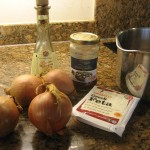
Filling ingredients

4 onions
50g crumbly cheese
4 sun dried tomatoes
4 tablespoons of Balsamic vinegar
1 egg
fresh black pepper
dash of milk

tart tins with removable bases

Finely chop the onions and put them in a pan with the vinegar on a medium-low heat for about 30 minutes. The idea is to gently sweat them down so they go soft and caramelise, don’t scorch or crisp them. You may need to add a dash of water to stop them catching on the bottom. Stir often.

Making the tarts

Heat the oven up to 180C

Once the onions are looking ready, take them off the heat and prepare the tart cases. Line the tart case bottom with greaseproof parchment. You’ll have to judge for yourself how much pastry you need to fill the size of tin you’re using.

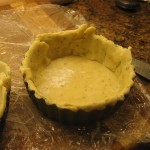
Roll out the pastry so it’s 3mm thick and lay it into the tart case. Make sure it goes right to the corners at the bottom.

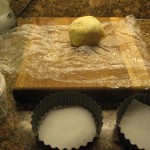
Pastry

Pastry. In tins!

We don’t want any soggy bottoms, so lightly prick with a fork, cover with foil or parchment, add a handful of baking beans and bake blind for 10 minutes or until the pastry just starts to turn golden brown.

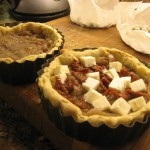
Now we assemble the final tarts by filling to about two thirds depth with onions, crumbling on some cheese and roughly chopped sun-dried tomato. If you prefer to see the onions, they’re good to bake at this point.

Filling the tarts

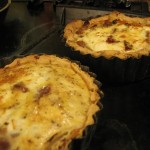
A golden finish

If you, like me, prefer a golden finish then whisk the egg with a fork, let it down with a spoon of milk and add a generous twist of fresh black pepper. Add a thin topping of egg mix and then it’s back into the oven for another 10-15 minutes until the topping has got some colour on it.

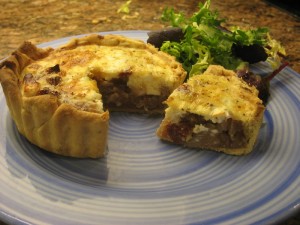
Leave it to cool and set for a few minutes before trying to take it out of its case before serving with a green salad and a light vinaigrette.

The finished caramelised onion, feta and sun dried tomato tarts